


Author: YLLED display Publish Time: 2026-01-04 Origin: Site


When clients compare SMD vs COB LED display technology, the conversation usually starts with price — but for fine pitch applications, the better question is how the screen will actually be used.
Here's the breakdown we'd walk a client through.
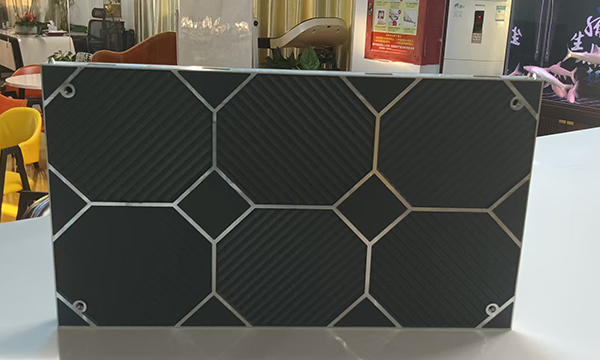
SMD uses mature surface-mount technology: pre-packaged RGB lamp beads get soldered onto a PCB board, each with its own independent bracket. That design keeps production straightforward and maintenance simple — it's the reason SMD has stayed the default for so long.
COB works differently. RGB chips get die-bonded and wire-bonded directly to the substrate, then the whole surface is encapsulated under glue — no individual lamp beads or brackets. That integrated structure is where COB's durability actually comes from. Some COB displays go a step further with flip-chip COB, connecting the chip straight to the PCB without wire bonds at all. This design can improve reliability and consistency in applications where long operating hours and minimal maintenance access are important.
A real fine pitch pixel pitch comparison usually comes down to the factors in this table, not just the headline spec:
| Feature | SMD Small Pixel Pitch | COB Small Pixel Pitch |
|---|---|---|
| Protection | Primarily IP30-IP40. Exposed beads are an easy target for dust, moisture, and physical impact — worth checking the cob led display ip rating difference before you compare prices. | COB displays can achieve higher surface protection levels depending on the encapsulation design and cabinet structure. |
| Image Quality | Moderate black level uniformity, with contrast that holds up well for most commercial content. | COB generally provides deeper black levels and better contrast consistency, especially in low-light indoor environments. |
| Reliability | More solder joints does mean more potential points of failure over time, which is part of what drives long-term smd led display dead pixel rate differences between the two — though SMD's production process remains mature and well-proven for its intended use cases. | Fewer leads and joints translates to meaningfully lower dead pixel rates over time. |
| Heat & Life | Moderate heat dissipation via lamp brackets. | The integrated structure can improve thermal stability compared with traditional exposed SMD packages, supporting longer service life. |
| Cost | Mature technology, efficient at scale. | More complex to manufacture, which shows up in the price — more on that below. |
If cost-effectiveness and easy maintenance matter more than anything else, SMD is the call. For most standard commercial projects — office conference rooms, general exhibition halls — it hits the right balance between performance and budget.
Works well for conference rooms, general exhibition halls, and monitoring centers. Best suited for P1.2 to P2.0 pixel pitch. Makes the most sense for projects that need frequent, easy maintenance and aren't locked into years of continuous operation.

COB is increasingly selected for premium fine-pitch applications — broadcast studios, command centers, medical imaging — where surface protection, contrast consistency, and long-term stability are the priority.
Best for broadcast studios, premium command centers, medical imaging, and luxury boardrooms. Recommended for ultra-fine pitches down to P0.9 COB LED display and below. Usually considered for projects where downtime is expensive and access for maintenance is limited.
Want to know specifically why control rooms are making this switch — and the two procurement mistakes we see most often? See our breakdown of COB LED displays for command and control rooms. For a real COB P1.25 installation in a working control room, our Los Angeles case study shows how it actually plays out on site. If you want to look at our fine-pitch COB product line directly, see our COB small pitch LED display series.
It really comes down to your specific environment and budget once you run the COB LED display cost comparison against what SMD would cost for the same job. Lower upfront cost and easier maintenance — SMD's still the reliable choice.
Need maximum durability, better contrast, and failure rates that stay low for years? COB is the better investment.
Choosing between SMD and COB depends on pixel pitch, viewing distance, operating environment, and maintenance requirements. Share your project details and our engineers can recommend a suitable configuration.
Email: info@ylleddisplay.com
WhatsApp: +86 152 8085 0851