


Author: YLLED display Publish Time: 2025-12-25 Origin: Site


When someone comes to us asking about pixel pitch and brightness, front service versus rear service rarely comes up first — but it probably should. This guide compares front service vs. rear service LED display maintenance approaches, because the answer changes almost everything else about how a project gets installed.
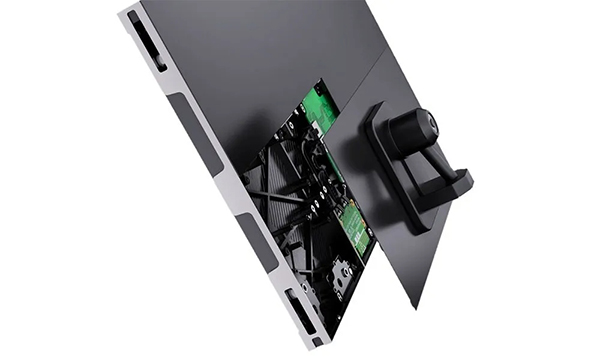
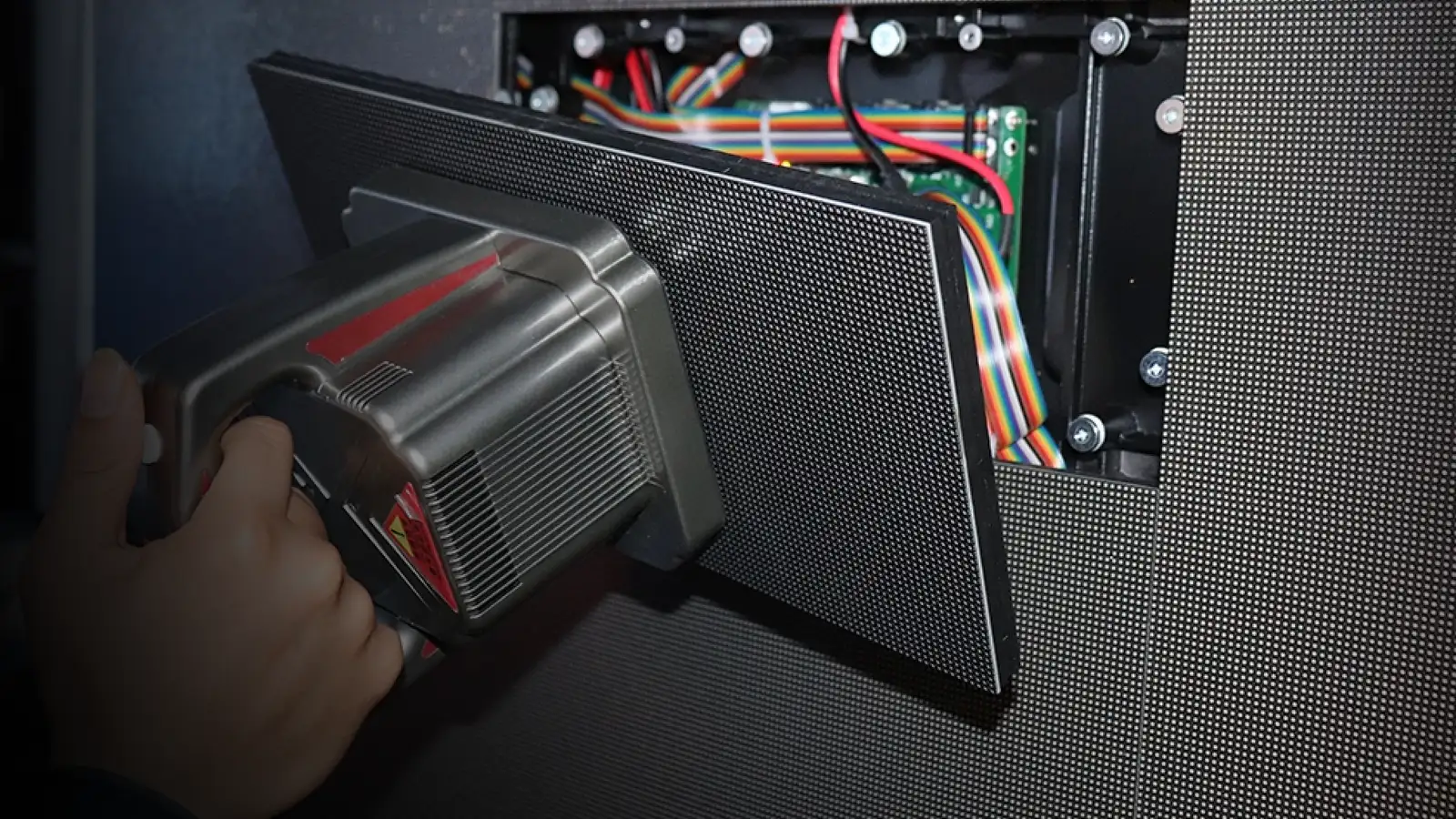
Front service means every maintenance task — swapping a module, making an adjustment — happens from the front of the screen. Nobody needs to get behind it. This is usually the starting point when people search for front maintenance LED display options, because it solves a problem that's obvious the moment you're staring at a wall with no room behind it.
There are two ways we usually see this done. Indoor fixed LED displays tend to use magnetic mounting — a form of magnetic front service LED module replacement — where the LED modules are held on with strong magnets and pulled off with a suction tool when something needs replacing. Outdoor front-maintenance displays more often use front-fixed screws with a rotary wrench, since that holds up better against weather and vibration. Either way, both fall under what's generally called front service LED display installation.
Front service tends to make the most sense for wall-mounted or flush installations, retail stores, hotels, churches, TV studios, glass curtain walls and embedded facades, curved or custom-shaped displays, and anywhere there's genuinely no rear space to work with.
Considering front maintenance for a building facade project? See our breakdown of how front maintenance reduces installation and lifetime operating costs.
Rear service LED display is the older, more traditional approach — technicians work from behind the screen, which means you need a dedicated maintenance corridor, usually 60 to 80cm or more.
It's still the right call for large outdoor billboards, rooftop displays, control rooms built with a planned maintenance aisle, and anywhere the structure already has the space to spare.
| Feature | Front Service LED Display | Rear Service LED Display |
|---|---|---|
| Maintenance Access | From the front | From the rear |
| Space Requirement | No rear space needed | Requires rear corridor |
| Installation Depth | Very shallow | Deeper structure |
| Maintenance Speed | Fast, single-person | Slower, more labor |
| Initial Cost | Slightly higher | Lower |
| Best For | Indoor, creative, space-limited | Large outdoor, traditional setups |
That table is really the whole led display maintenance access trade-off in one place — everything else in this guide is just unpacking it.
Rear service tends to win when you've got enough usable space behind the screen, stability and lower upfront cost matter more than convenience, the budget's tight but the space exists, or you're dealing with outdoor billboards and rooftops.
Front service tends to win when downtime needs to stay minimal and the design has to look clean; when lifecycle cost and staying operational matter more than day-one price, in retail, hospitality or corporate lobbies, or when the shape itself is unusual — curves, spheres, cubes.
Still unsure which LED display maintenance method is right for my project? Honestly, it usually just comes down to two things: how much rear space you actually have, and how often the display is going to need servicing. On a facade, this trade-off plays out in a real project — see our building facade case study. For indoor projects, see our indoor fixed LED display buying guide.
Front versus rear service is one of several planning decisions covered in our complete guide to fixed LED displays.
Both approaches are reliable — the right one just depends on space, budget, maintenance strategy, and how the project needs to look. Front service buys flexibility and saves space; rear service is the proven, lower-cost route when the room is there for it.
Contact us for a personalized consultation now. YLLED Display will help you select the right maintenance approach to ensure your LED display delivers outstanding performance and reliability for years to come.