


Views: 0 Author: YLLED display Publish Time: 2026-01-04 Origin: Site


After supporting hundreds of indoor LED display projects over the years, we’ve found that the biggest mistake clients make is choosing technology based solely on price—ignoring how usage scenarios impact long-term cost and performance. That’s why we’re breaking down SMD and COB for you.
Below is practical guide based on our project experience to help you make the right call.
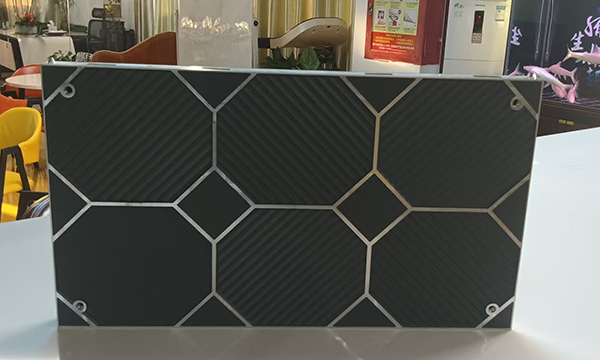
SMD Technology:SMD uses mature surface-mount technology: we solder pre-packaged RGB lamp beads onto a PCB board, and each bead comes with its own independent bracket—this design makes production straightforward and maintenance simple.
COB Technology: COB uses Chip on Board technology: we directly die-bond and wire-bond RGB chips to the substrate, then encapsulate the entire surface with glue—no independent lamp beads or brackets needed. This integrated design is what delivers its superior durability.
Feature | SMD Small Pixel Pitch | COB Small Pixel Pitch |
|---|---|---|
Protection | Primarily IP30-IP40. Exposed beads are susceptible to dust, moisture, and physical impact. | Up to IP54-IP65 for indoor use. High resistance to dust, moisture, collision, and static. |
Image Quality | Contrast ratio of 4,000:1–8,000:1 with moderate black level uniformity. | Superior contrast ratio of 10,000:1 with highly uniform black levels. |
Reliability | Prone to cold soldering and dead pixels over time due to numerous solder joints. | 90% lower dead pixel rate compared to SMD due to fewer leads and joints. |
Heat & Life | Moderate heat dissipation efficiency via lamp brackets. | 30%+ higher heat dissipation efficiency, resulting in slower light degradation and longer life. |
Cost | Mature technology with high mass production efficiency. | Complex manufacturing process leading to higher costs. |
--If cost-effectiveness and easy maintenance are your top priorities, SMD is the way to go. For most standard commercial projects—like office conference rooms or general exhibition halls—SMD hits the sweet spot between performance and budget.
Best for: Conference rooms, general exhibition halls, and monitoring centers.
Pixel Pitch: Best suited for P1.2 to P2.0 applications.
Maintenance: Preferred for projects requiring frequent or easy maintenance and shorter-term operations.
The decision ultimately depends on your specific environment and budget. If you prioritize lower initial cost and ease of maintenance, SMD remains a reliable choice.
However, if you require maximum durability, superior contrast, and ultra-low failure rates, COB is the superior investment for the future.
If you’re still unsure about the right pixel pitch or technology for your project—whether it’s a 50㎡ monitoring center or a high-precision medical imaging display—our engineers (YLLEDDISPLAY) can provide a free on-site assessment and tailored quote.
