


Author: YLLED display Publish Time: 2026-01-28 Origin: Site


When specifying an LED display for a commercial or public-space project, performance metrics like pixel pitch and brightness are only part of the equation.
For engineering managers, system integrators, and procurement teams, regulatory compliance is what ultimately determines whether a project launches smoothly—or turns into a costly delay.
This guide breaks down what LED compliance really means, why it matters across different regions, and how to verify that your display hardware meets real-world regulatory expectations—not just marketing claims.
In global LED projects, compliance failures rarely show up on day one. They surface when it’s already too late.
Common consequences we see in non-compliant installations include:
Insurance claim rejection
Commercial insurers often refuse fire or electrical damage claims if installed equipment lacks recognized safety certifications.
Customs clearance delays or seizures
Missing or incorrect documentation can result in shipments being held at port, causing missed installation deadlines and contractual penalties.
Electromagnetic interference violations
Poorly tested LED systems may exceed EMC limits, disrupting Wi-Fi, emergency communication systems, or nearby AV equipment—triggering regulatory fines.
For project owners, these risks typically outweigh any upfront cost savings from uncertified hardware.
A certification label alone does not guarantee system-level compliance. Experienced buyers evaluate how compliance is implemented, not just whether a logo exists.
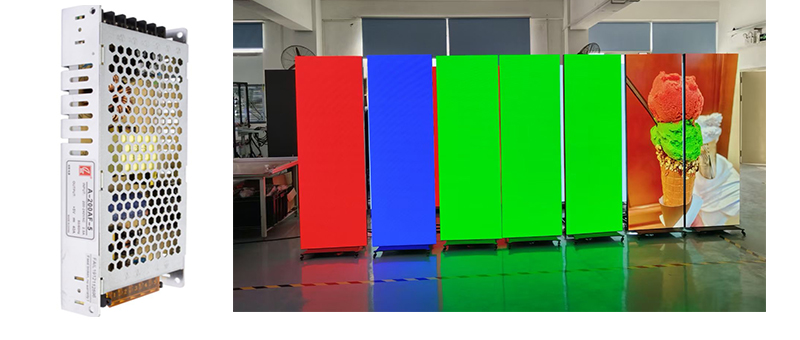
Compliance starts at the bill of materials.
For example, reputable LED cabinets use independently certified power supplies from manufacturers such as Mean Well or TDK-Lambda.
If a critical component lacks certification, the entire cabinet becomes a compliance risk—regardless of the final label.
Low-cost LED modules often fail during the first weeks of operation, a phenomenon known as infant mortality.
Professional manufacturers mitigate this risk through:
72-hour continuous burn-in
Full-brightness cycling
Thermal stress during testing
This process identifies weak solder joints and unstable components before shipment, not after installation.
Compliance as Risk Management, Not Cost
From a project perspective, compliance is best viewed as risk mitigation rather than an expense.
Certified components, documented testing, and region-specific approvals reduce:
Legal exposure
Installation delays
Long-term maintenance risk
Most importantly, they protect the reputation of everyone involved in the project.
Are you planning a project with specific regional requirements?
[ ] to review your specs and ensure your next installation is fully compliant and future-proof.

